How Much Protein Per Day to Build Muscle: A Practical Guide
How much protein per day do you need to build muscle? Get a clear, body-weight-based target and simple ways to hit it with real food and whey.
Protein is the one macronutrient most training-minded people under-eat without realizing it. You can train hard, sleep well, and still leave muscle on the table if your daily intake lands too low. The good news is that the answer to how much protein per day you need is not a mystery - it is a number you can calculate, hit, and adjust. This guide gives you a practical target based on your body weight and training load, then shows you how to reach it consistently inside a real routine.
How Much Protein Per Day Do You Actually Need?
For most adults who lift, the research-backed range for building and keeping muscle sits between 1.6 and 2.2 grams of protein per kilogram of body weight per day (roughly 0.7 to 1 gram per pound). Below that range, gains tend to stall. Far above it, there is little added benefit for muscle - the extra is simply used for energy or stored.
Start With Your Body Weight
The simplest way to set your baseline is to start with body weight. Take your weight in pounds, multiply by 0.7 to get a conservative daily floor, then by 1.0 to get a strong target for active training.
A 180-pound person, for example, is looking at roughly 126 to 180 grams of protein per day. A 130-pound person sits around 91 to 130 grams. That range is wide on purpose - where you land inside it depends on training load and goal.
Adjust for Training Load and Goal
- Lifting consistently: target the middle to upper end (1.6-2.2 g/kg), where muscle protein synthesis is best supported.
- Training in a calorie deficit: push toward the higher end. When calories drop, protein does more work protecting lean mass.
- Older adults: aim higher as well. Protein needs rise with age as the muscle-building response to food and training weakens.
- Lightly active or new to training: the lower end of the range is usually enough.
Where Whole Foods End and Supplementation Begins
For most people, the target above is reachable with whole foods: eggs, Greek yogurt, chicken, fish, lean beef, tofu, and legumes spread across three to four meals. A 40-gram dose of protein per meal is a useful anchor - four of those and a 160-pound person is already close to target.
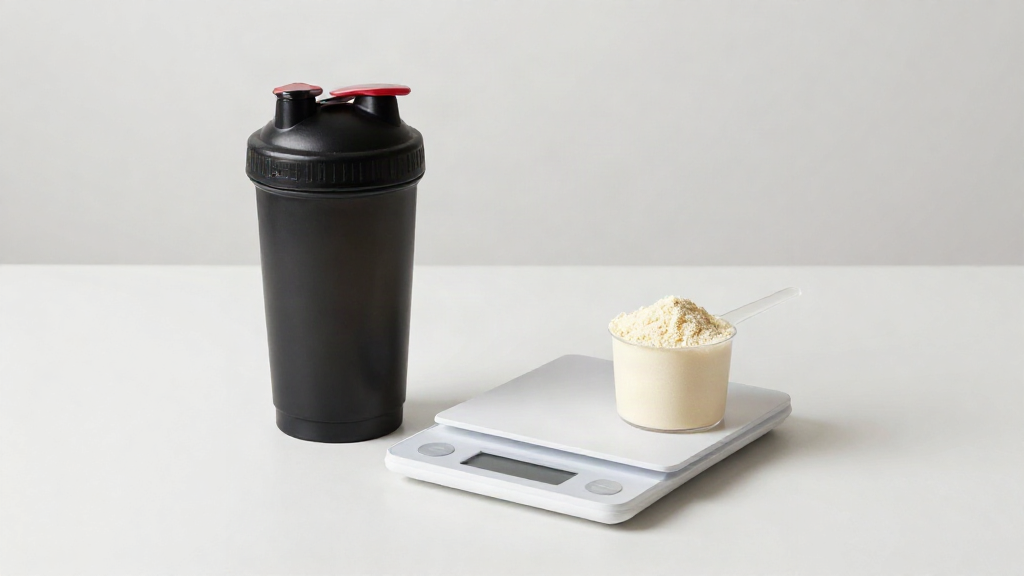
The gap opens up when life gets in the way. Appetite is low in the morning, lunch is rushed, training runs late, and suddenly you are 50 grams short at 9 p.m. That is exactly where a quality protein powder earns its place. It is not a replacement for food - it is a bridge that closes the distance between what you ate and what you needed.
One scoop of Advanced Whey Protein delivers roughly 24 to 25 grams of protein for very few calories, mixes in seconds, and travels well. Vanilla and chocolate both work as a standalone shake or blended into a smoothie, oats, or yogurt. Used deliberately, a shake turns a missed target into a met one.
Simple Ways to Hit Your Target Consistently
Hitting your number once is easy. Hitting it most days is what actually changes your body composition. A few habits make that far more likely:
- Anchor every meal with protein first. Build the plate around the protein source, then add carbs and fats around it.
- Use shakes as a bridge, not the base. One or two shakes a day close gaps; whole food should still carry most of the load.
- Spread intake across the day. Three to four protein feedings beat one large serving at dinner for muscle-building purposes.
- Time training nutrition for convenience, not magic. Total daily protein matters more than any narrow window. A shake after training is simply an easy way to add a reliable dose.
- Track loosely for a week. Estimating for seven days teaches you what 40 grams of protein actually looks like on a plate - no scale required long term.
Make the Number a Habit
How much protein per day you need to build muscle comes down to a simple calculation: body weight, training load, and goal. Land between 1.6 and 2.2 grams per kilogram, adjust for your situation, and then do the unglamorous part - hit it consistently. Kaizen means continuous improvement, and protein is one of the few variables you can improve every single day, one meal and one shake at a time.
The Kaizen lineup
Clinically-minded supplements formulated by a nurse practitioner and manufactured in an FDA-registered, GMP-certified facility.
Shop Supplements 10% of profits from every order go to Point One Vision, a nonprofit.